
Three Little Pigs ESL Activities for Beginner Kindergarten Students
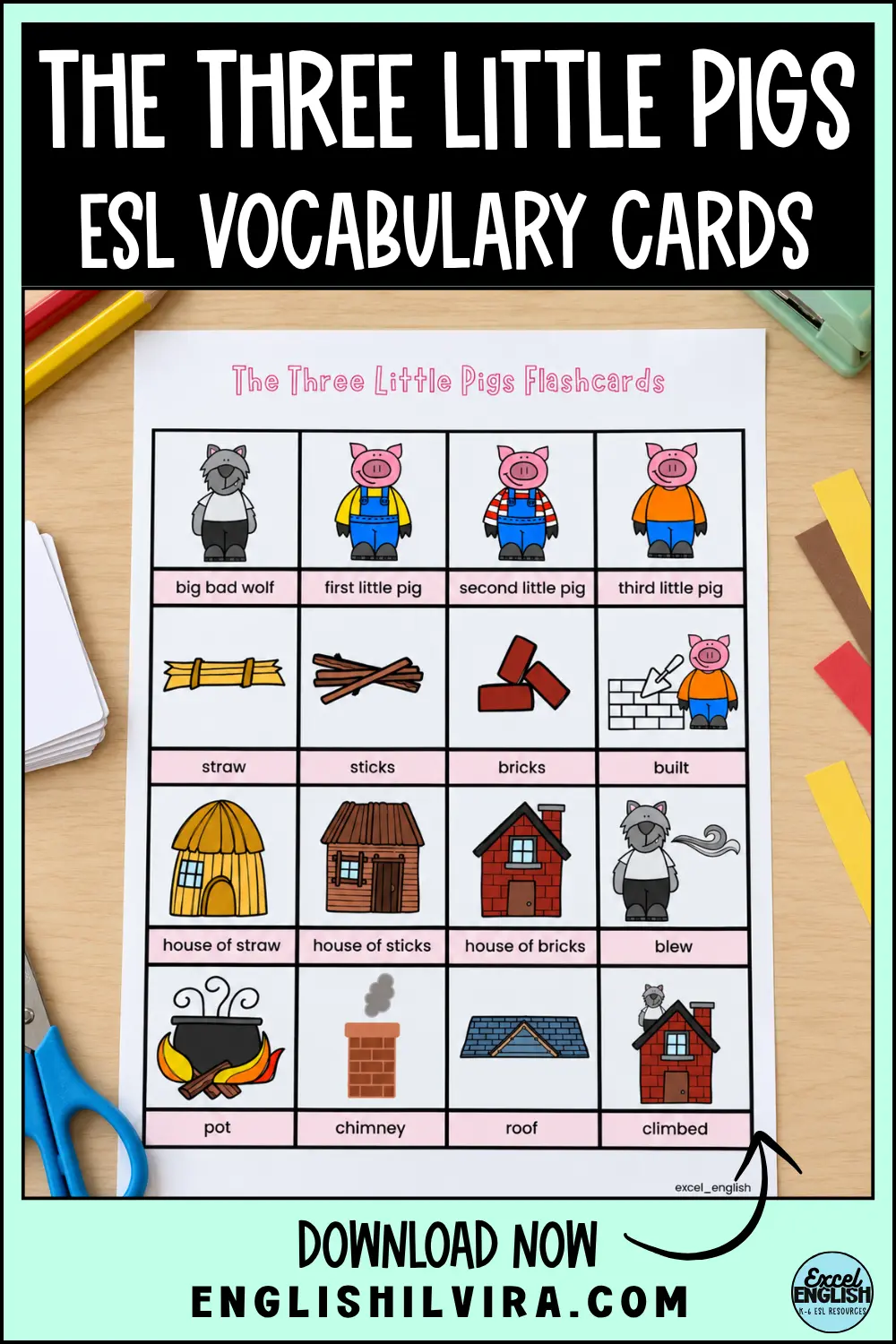
How do you turn a familiar folk tale like The Three Little Pigs into a week of meaningful English language practice for Kindergarten ESL learners? Recognisable to many children across different languages, this story’s playful characters and repeated phrases made it a fun, engaging choice for my Kindergarten students.
In this post, I’ll share seven Three Little Pigs ESL activities we tried across five 45-minute lessons. From making houses and puppets to sequencing pictures and dramatic play, we gradually moved from teacher-supported practice towards independent retelling, building vocabulary and developing speaking, listening, reading and writing skills along the way.
1. Introduce the story with playful clues and expressive reading
My pig sound and facial expressions immediately connected students with the story. Before showing the cover, I invited them to guess what we would read. Everyone had something to contribute.
We explored vocabulary using pictures and actions: pig, wolf, house, straw, sticks, bricks, roof, door and chimney. Questions such as “Where is the chimney?” and “Which house is made of bricks?” helped me check understanding.
During reading, I used a deep voice for the wolf and a high voice for the pigs. I acted out the huffing and puffing and used frightened facial expressions to show how the pigs felt.
Students joined in with actions, words and repeated phrases:
“Not by the hair on my chinny chin chin!”
We discussed its meaning: the pig was refusing to let the wolf in. Even students using very little English could participate through movement and sounds.
2. Make paper houses and stick puppets
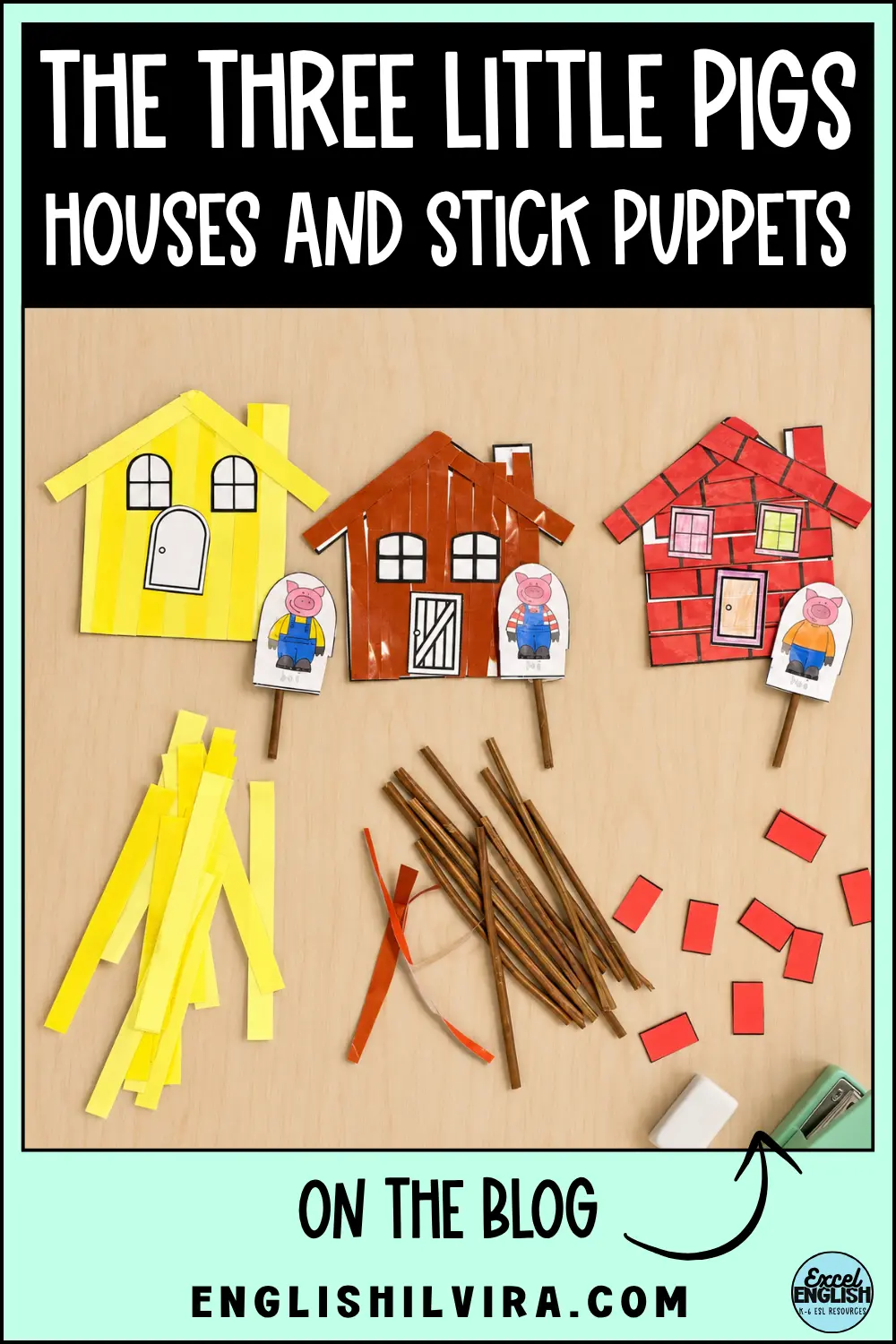
After reading, we created props for dramatic play. I provided house outlines and strips of yellow paper for straw, brown for sticks and red for bricks.
Students glued the strips onto their houses, then attached character cut-outs to sticks. Knowing we would use their creations for storytelling gave the craft a clear purpose.
While they worked, I had individual conversations about house parts, materials, colours and who would live in each house.
“What are you making?”
“A house.”
“What is your house made of?”
“Bricks.”
These exchanges revised vocabulary naturally. I could expand responses: “Yes, you’re making a brick house for the third pig.”
Download my house templates on TPT here.
Doownload the stick character templates here.
Last year, we used natural materials. Read how we made those houses here.
3. Sequence pictures and retell together
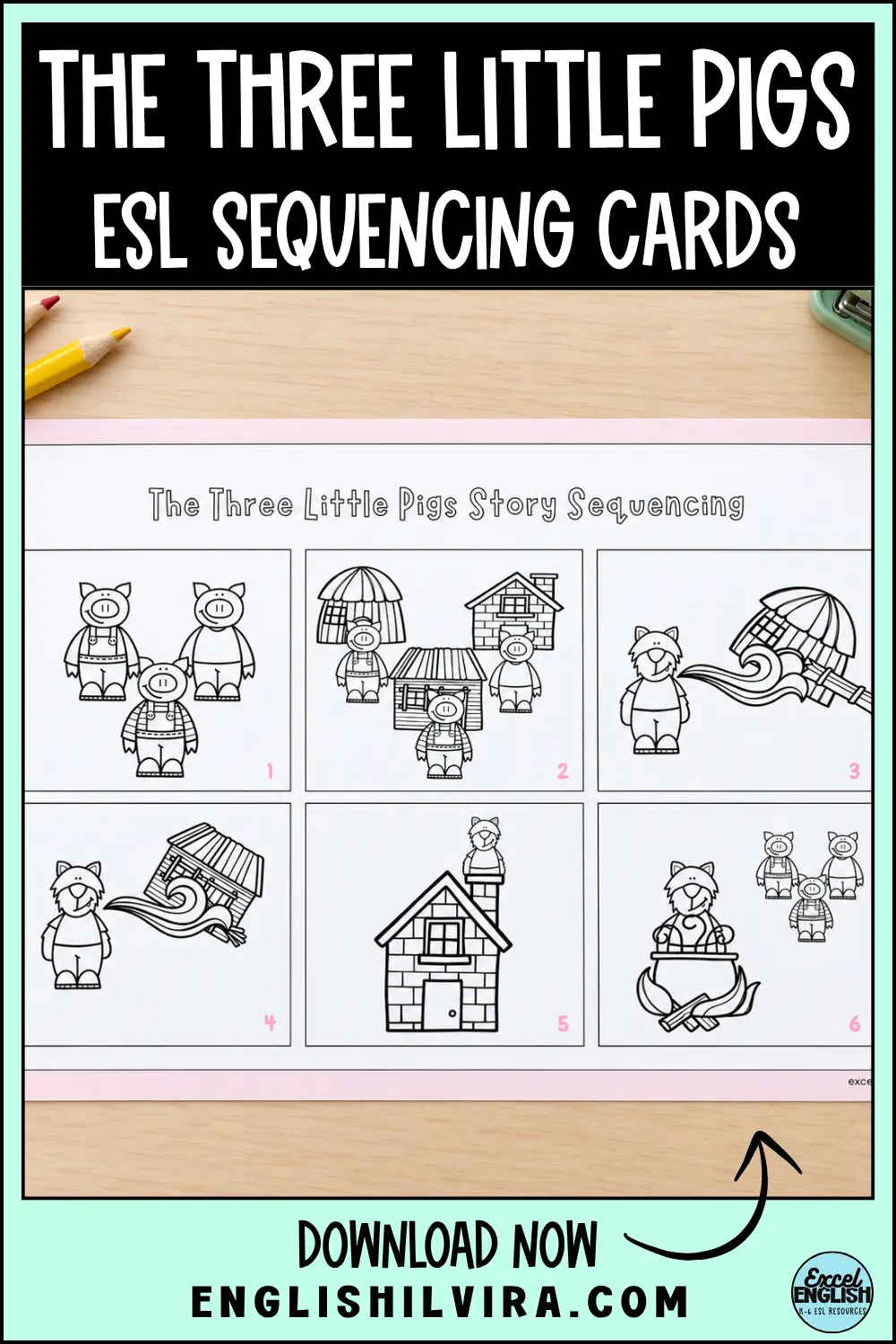
Next, we arranged story pictures as a group. I modelled how to identify the first event, then invited students to choose what happened next. Together, we rehearsed a sentence for each picture.
We used first, then, next and last to organise our ideas:
“First, the pigs built their houses.”
“Then, the wolf blew down the straw house.”
Pictures supported memory, while gestures and sentence beginnings supported speaking. Students contributed a word, phrase or sentence, depending on their confidence.
Download my free sequencing resource here. Use the pictures to support retelling or observe students’ comprehension and speaking skills.
4. Practise retelling with a partner
Students then sequenced the pictures and retold the story in pairs. This increased their speaking time and encouraged them to take turns, listen and help each other remember events.
I listened to their vocabulary, grammar, comprehension and speaking. Could they name the materials, explain an event or connect ideas without a prompt?
I gave brief feedback by modelling:
Student: “Wolf blow house.”
Teacher: “Yes, the wolf blew down the house.”
Even reluctant students became engaged. The pictures provided a starting point, and our group practice gave them familiar language to draw on.
Image suggestion: Sequencing cards arranged beside students’ stick puppets.
5. Read familiar, decodable sentences
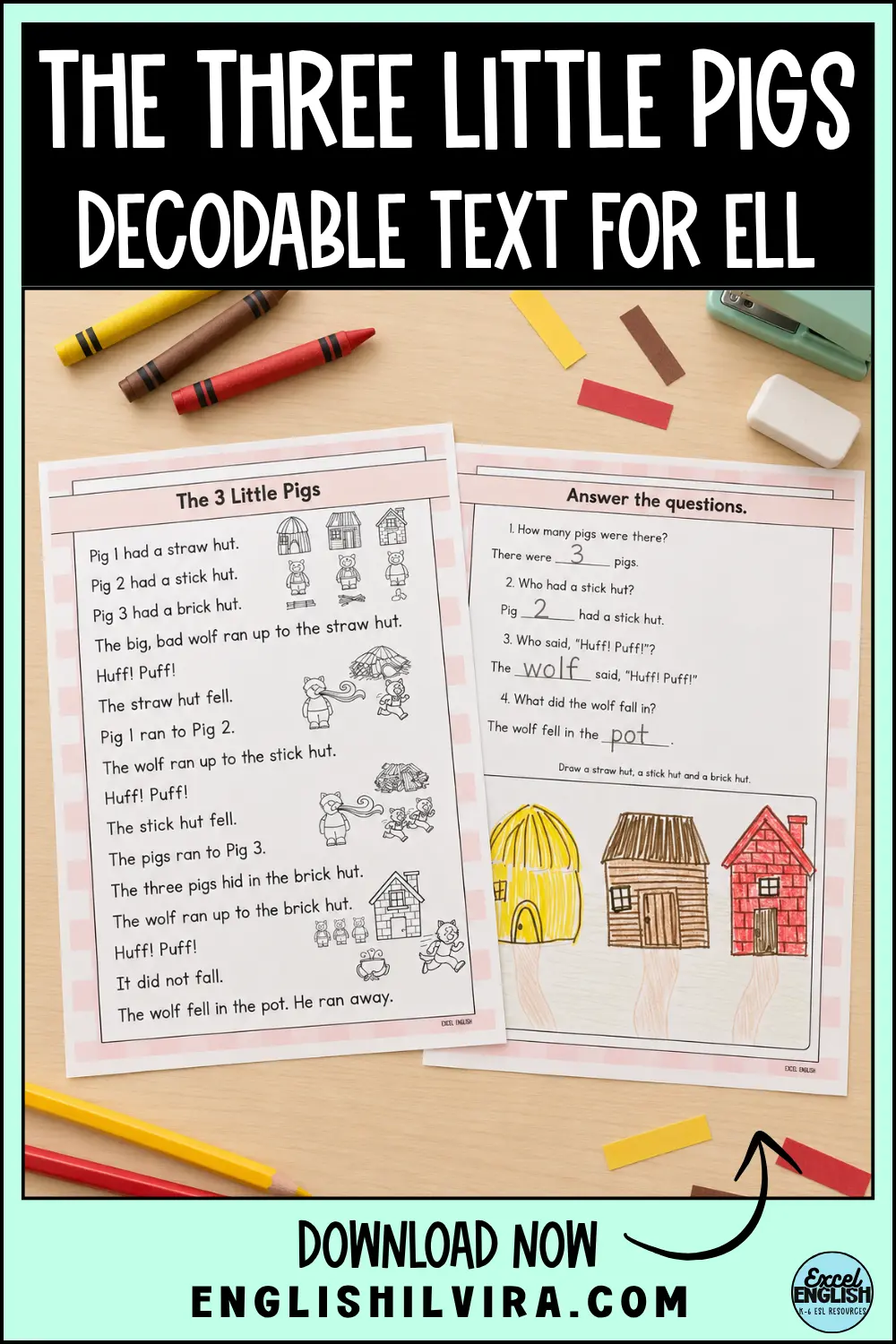
Once students understood the story, we practised short sentences from our text. I selected sentences matching the phonics they had learnt, supporting unfamiliar story words.
Depending on your phonics sequence, examples might include:
“The pig ran.”
“The hut fell.”
We practised blending, read together and reread for smoother reading. Familiar story events helped students connect the sentences with meaning.
For more ideas, see my post on teaching reading comprehension to ESL students.
6. Try running dictation—with crawling pigs!
I introduced running dictation for the first time with this group. For safety, students crawled like pigs instead of running. The movement fitted our story and made the activity memorable.
Students worked in pairs. Each pair had a familiar sentence on a board at one side of the classroom. Their partner sat opposite with another board, ready to write.
One student visited the sentence, read it and remembered as many words as possible. They returned to dictate the words, going back to check when needed. Then they swapped roles.
Familiar sentences kept the task manageable. Students practised reading, speaking, listening and spelling, alongside phrases such as “Say it again, please” and “Your turn!”
7. Finish with independent dramatic play
After several days of guided practice and feedback, students were ready for freer speaking. Their favourite activity was dramatic play, using the props they had created: the three paper houses and stick characters.
Students arranged their houses and moved the characters as they acted out events. Their creations helped them show what was happening while using familiar words and phrases.
I stepped back as they told the story to each other. Pictures remained available, but students took more responsibility for remembering events and choosing their words.
Our focus was speaking, so we chose dramatic play without a script. Read about another approach with previous learners in my Three Little Pigs Reader’s Theatre post.
Five days of Three Little Pigs ESL activities
Each lesson lasted about 45 minutes, with familiar language revisited throughout.
Day | Main activities |
|---|---|
1 | Story clues, vocabulary and expressive shared reading |
2 | Paper houses, puppets and individual conversations |
3 | Group sequencing and partner retelling |
4 | Decodable reading and running (piggy) dictation |
5 | Language revision and independent dramatic play |
Which activity will you try?
These Three Little Pigs ESL activities helped students move from joining in with familiar words to retelling independently. Each task gave them another reason to use English.
Would you try the craft, partner retelling or piggy dictation? What has worked with your students? Share your ideas in the comments, and grab the free sequencing resource to get started.
About the author
Ilvira Groom has 19 years of experience teaching ESL to adults and children in Russia, England and Australia, including face-to-face, online and EFL teaching, and work with refugees. She is a primary EAL/D teacher in Sydney and the creator of EXCEL ENGLISH ESL Resources.