Halloween Readers’ Theatre: Build Reading Fluency, Comprehension and Confidence
Halloween season is here, and witches, pumpkins and spooky stories are finding their way into our classrooms. Why not turn that excitement into purposeful reading practice? Halloween Readers’ Theatre gives students a reason to reread—and enjoy it—as they prepare to bring a story to life.
With each rehearsal, students work towards reading accurately, phrasing their lines smoothly and using expression that shows understanding. For primary ESL and EAL/D learners, familiar lines and supported practice also help build confidence to read aloud.
Whether your students become scary carrots, helpful animals or a determined little bat, Creepy Carrots!, Room on the Broom and Big Pumpkin offer engaging opportunities to develop reading fluency, comprehension and confidence.
What is Halloween Readers’ Theatre?
Readers’ Theatre involves students reading a script aloud, taking the parts of narrators and characters. They communicate the story through their voices, using phrasing, intonation and expression.
Students keep their scripts; they do not need to memorise their lines.
Headbands, puppets and simple actions can make reading enjoyable, but the main learning happens as students revisit the text, discuss meaning and rehearse.
The performance gives repeated reading a purpose. Instead of simply being asked to “read it again”, students are preparing to share a story.
You can read more about this approach in my Readers’ Theatre post for new arrival EAL/D students.
How Readers’ Theatre supports young readers
Develop reading fluency through purposeful practice
Fluency involves accuracy, an appropriate pace and expression. A fluent reader groups words into meaningful phrases rather than reading every word separately.
During rehearsal, help students work through unfamiliar words, then reread the whole sentence. Model where to pause and how punctuation guides the voice.
Give each rereading a focus: accurate words, smoother phrasing or expression.
Strengthen comprehension through character and story
Students need to understand a line before deciding how to read it.
Why is Jasper worried? Why does the witch thank the animals? Why does the little bat sound confident?
Discussing these questions connects expression with meaning. Students also follow events and listen to other characters so they know when to respond.
Build confidence with manageable roles
Students can hear a model, practise with a partner and rehearse in a group before reading to an audience.
Choose roles that offer achievable challenges. Short, repeated lines give less confident readers a starting point, while narrator sections provide longer passages.
Praise specific progress: “You read that question smoothly, and your voice showed that Jasper was worried.”
Choose a Halloween Readers’ Theatre script
My simplified scripts are designed for Year 1–2 English learners. Match roles and support to your students’ reading readiness.
Story | Reading fluency focus | Comprehension focus |
|---|---|---|
Creepy Carrots! | Pauses, questions and changing expression | Feelings, motives and the surprise ending |
Room on the Broom | Conversational phrasing and repeated dialogue | Sequencing, problems and solutions |
Big Pumpkin | Shared reading, emphasis and rhythm | Cause and effect, cooperation and character contributions |
Begin by sharing the original picture book. Discuss its characters, main problem and ending before introducing the adapted script.
1. Creepy Carrots!: read with suspense
Creepy Carrots! by Aaron Reynolds, illustrated by Peter Brown, offers playful suspense and a clever twist.
My adaptation includes Jasper Rabbit, his parents, two narrators and three carrots. The carrot roles contain short contributions, while the narrators carry longer sections.
Prepare students to understand the text
Introduce essential vocabulary, including creepy, follow, shed and plan. Use pictures, gestures and examples, then locate the words in the script.
Check what Jasper thinks is happening. Understanding his fear helps students choose an appropriate voice.
Rehearse questions and pauses
Model Jasper’s question, “What was that?” Try a casual voice, then a worried voice.
Ask which reading fits the scene and why. Partners then reread the surrounding passage, using the punctuation and events to guide their expression.
The carrots can creep and freeze during rehearsal. Keep their scripts accessible so movement supports the reading.
Discuss the surprise ending
Ask why Jasper and the carrots both believe their plans worked. Encourage students to revisit the final scene for clues.
You can download my Creepy Carrots! Readers’ Theatre pack here.
2. Room on the Broom: practise expressive dialogue
Room on the Broom by Julia Donaldson, illustrated by Axel Scheffler, features repeated encounters that help students become familiar with conversational patterns.
My adaptation includes eight speaking roles across six scenes.
Establish the sequence
Use the hat, bow and wand props to revisit what the witch loses and which animal finds each object.
Ask students to explain why the animals join the broom. This checks understanding beyond remembering their names.
Read in meaningful phrases
Model a short question-and-answer exchange. Students echo your reading, then practise with a partner.
Encourage them to group words naturally and let their voices show gratitude, excitement or fear. When a word causes difficulty, help students read it, clarify its meaning and reread the complete phrase.
Explore problems and solutions
After reading, discuss how the animals help the witch and how she responds. Students can find relevant scenes to support their answers.
Find my Room on the Broom script, headbands, puppets and props in my TPT store.
3. Big Pumpkin: build confidence through shared reading
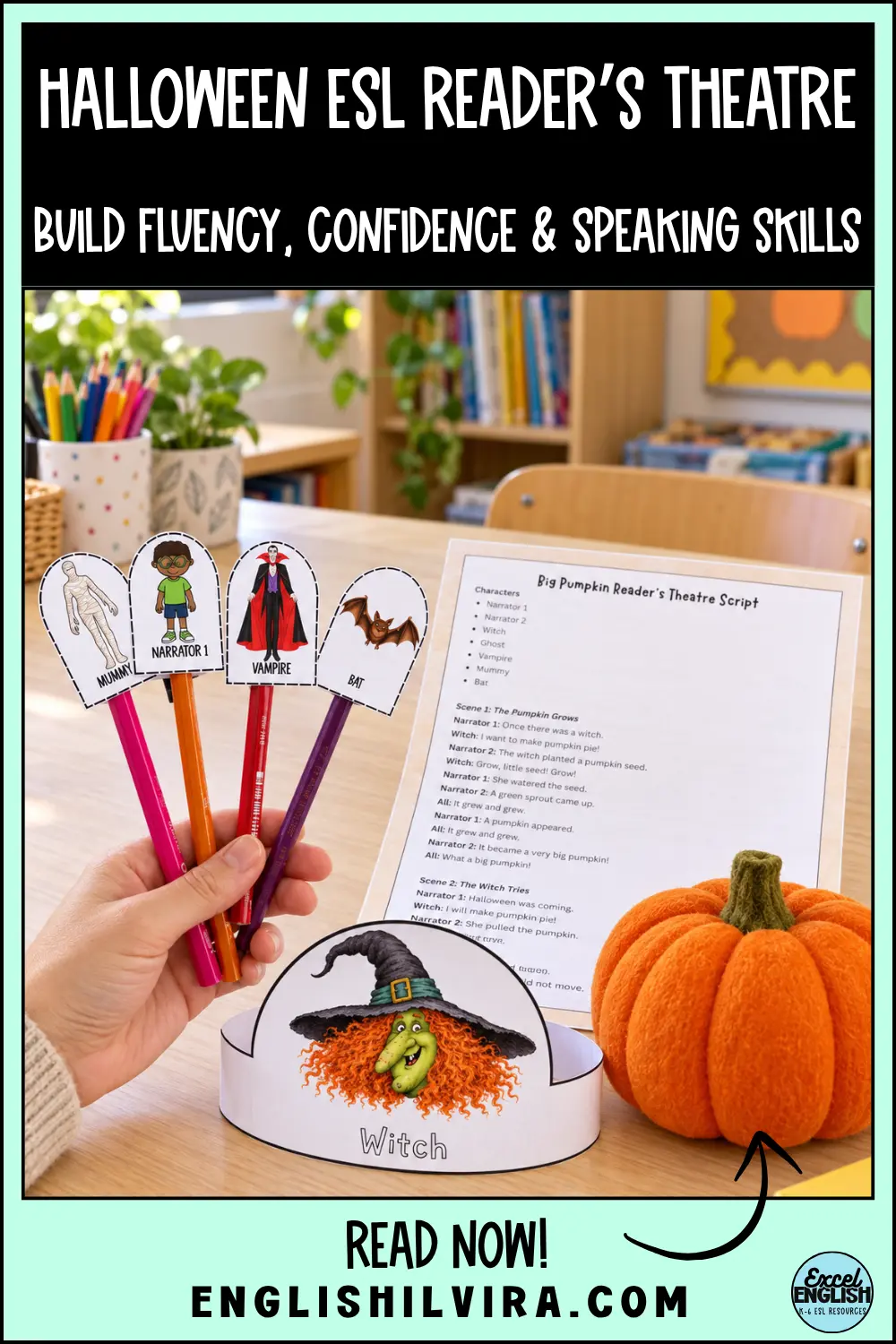
Big Pumpkin by Erica Silverman, illustrated by S. D. Schindler, centres on repeated attempts to solve one problem.
My script combines seven speaking roles with shared responses, providing opportunities to rehearse together.
Clarify the problem
Teach vine, pull and stuck. Ask students to explain what the characters are trying to do and why they need help.
Practise repeated passages
Use the shared pulling sections for choral reading. Model clear phrasing and emphasis before students read together.
Gradually reduce your support. Listen for accurate words, appropriate pauses and expression that reflects the characters’ effort.
Explain what changes
Ask why the final attempt succeeds. Encourage students to explain how cooperation changes the outcome, referring to the script.
You can download my Big Pumpkin Readers’ Theatre pack here.
Make reading progress visible
Keep rehearsals short and focused. Share simple success criteria:
I can read my words accurately.
I can read in meaningful phrases.
I can use expression that matches the story.
I can explain what is happening.
Finish by sharing a scene with another group. Keep scripts available and celebrate improvements in reading and understanding.
Bring purposeful reading to your Halloween lessons
Choose one story, prepare essential vocabulary and give students time to rehearse. Halloween Reader’s Theatre can turn a familiar seasonal theme into meaningful reading practice.
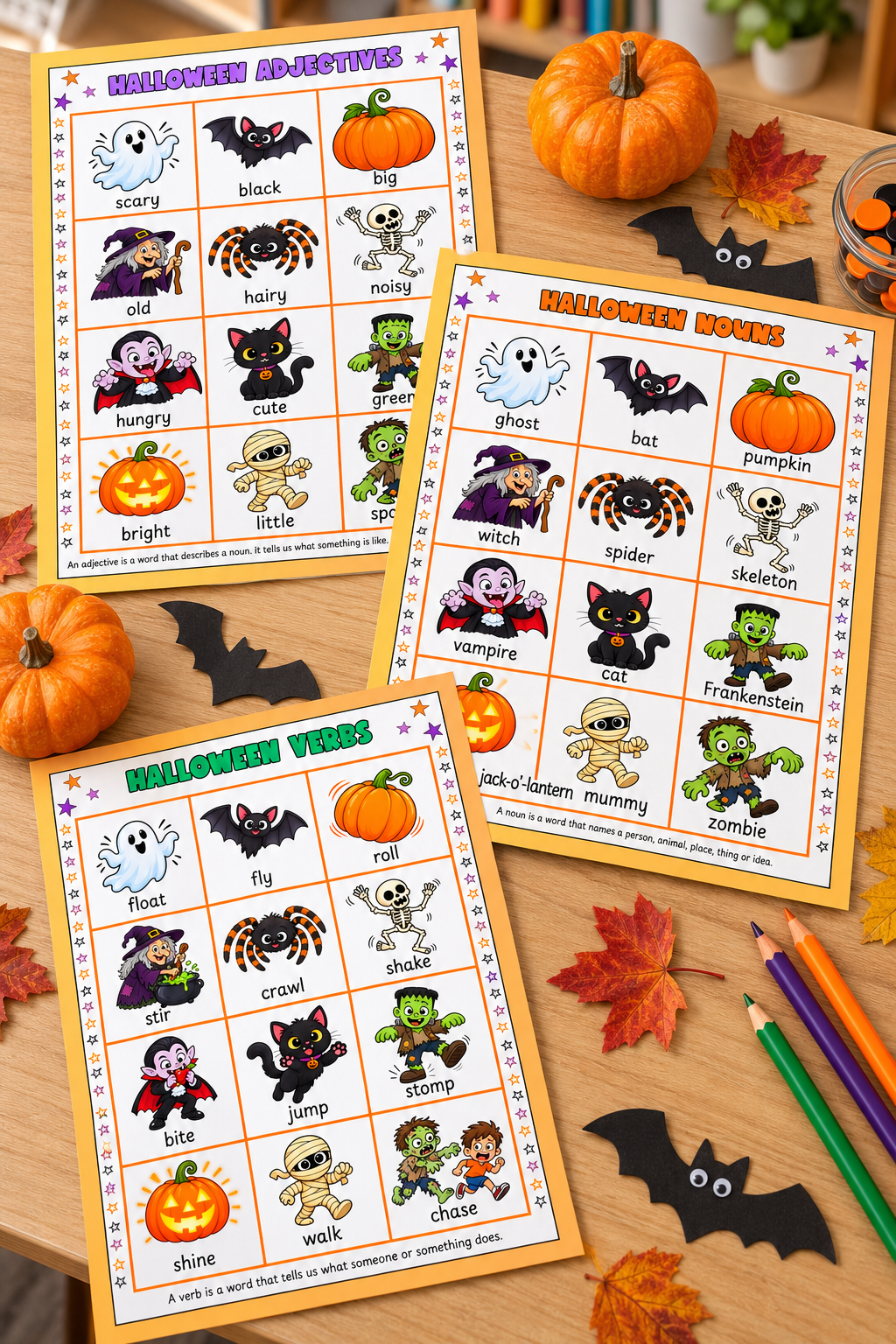
For more ideas, explore my Halloween ESL activities. You can also sign up for my free Halloween vocabulary pack to introduce useful words before reading.
Which story will you choose to build reading fluency, comprehension and confidence? Share your choice in the comments!
About the author
Ilvira is an experienced EAL/D and ESL teacher who creates practical English-language resources for primary teachers, New Arrivals students and multilingual learners.