

The Gingerbread Man Reader’s Theatre: The Perfect End-of-Year ESL Activity
The Gingerbread Man Reader’s Theatre: The Perfect End-of-Year ESL Activity
The Gingerbread Man Reader’s Theatre turned out to be exactly the end-of-year activity my ESL and EAL/D students needed. Finding something that still feels purposeful at this time of year can be tricky — students are tired, routines are changing, and attention spans are shorter.
But with the right task, the final weeks of term can become one of the most meaningful times of the year.
This activity brought together speaking, reading, fluency, teamwork, and confidence.
It was a great example of Reader’s Theatre done well — and most importantly, the students had fun.
Why Reader’s Theatre Works So Well for ESL Learners
By December, my Newly Arrived students had already spent several weeks exploring fairy tales and folktales. Because of this, students were comfortable with the stories and the repeated language patterns that come with them.
My Kindergarten ESL students had started reading decodable readers, and my Stage 1 ESL students had made strong progress in reading accuracy and confidence. Their speaking skills were developing, but they really needed a clear reason to work on fluency, expression, and purposeful oral language.
That’s where Reader’s Theatre fit perfectly.
You can read about the key benefits of Reader’s Theatre for ESL and EAL/D students here.

When I told my students early on that we would be performing for other classes, the mood changed straight away. Some students were excited, some were nervous — but all of them were engaged. Having a real audience made a big difference.

Why The Gingerbread Man Is an Ideal Choice
I chose The Gingerbread Man for our Reader’s Theatre because it works beautifully for ESL learners. The story is repetitive, predictable and full of action — all things that support language development.
It also connects naturally to seasonal traditions in December that many children experience in an English-speaking country, such as baking gingerbread biscuits or decorating gingerbread houses.
Most importantly, this ESL drama activity gave my students the chance to show how much they had learned — whether they had been in the program all year or had joined later.
Preparing for the Reader’s Theatre
Before introducing the script, we spent time getting to know the story really well.
We read and retold The Gingerbread Man, practised sequencing the events orally, talked about characters and repeated phrases, and drew our own Gingerbread Men — which the students absolutely loved.
We even tried a Gingerbread Man train activity along the way.
👉 Read about it here — and why it didn’t quite go to plan!
Not every idea works perfectly, and that’s okay. Those moments are part of real teaching.

Assigning Roles With Purpose
I wrote the Gingerbread Man Reader’s Theatre script myself and allocated roles carefully. With limited time and high energy levels at the end of the year, assigning roles helped rehearsals run smoothly and kept the focus on practising and working together.
Each role was matched to students’ language strengths:
A confident reader became the narrator
Expressive speakers played the Gingerbread Man and the fox
Kindergarten students surprised me with how well they handled longer speaking roles
Other students played the animals at a level they felt comfortable with
One moment really stood out. A student refused to be a hen and asked instead to be a fairy butterfly. I said yes — and that small change completely transformed her engagement. Sometimes flexibility is the best form of differentiation.
Partway through rehearsals, one student went travelling overseas, so I reduced the number of roles. It didn’t affect the story at all. With The Gingerbread Man, the number of animals chasing him is flexible, which makes this story very easy to adapt.

Props, Costumes, and Classroom Responsibility
I kept the props simple but meaningful: a cardboard Gingerbread Man, animal headbands, and costumes from our prop box. For a few animals, I brought in coloured T-shirts.
One unexpected benefit was how much responsibility students developed. At first, packing up was messy and rushed. So we stopped, practised folding costumes properly, and made packing away part of the routine. Before long, students took pride in looking after the props.
That’s language learning — and life skills — working together.

Learning Moments Along the Way
There were plenty of incidental learning moments. Some students forgot their cues. Others needed reminders to stay focused.
The narrator often said “The Gingerbread Man run fast”, which led to great conversations about adding -s to verbs in the present simple. Other students mixed up “he” and “she”, which created another natural opportunity for learning.
These moments were incredibly valuable. They gave us real reasons to:
Talk about grammar in context
Practise fluency naturally
Support one another as a team
I also sent the scripts home, and the difference was clear. Parent support played a big role in boosting students’ confidence.

Practising for the Reader’s Theatre
We only had one week to learn and practise the story, and it was the second-last week of term. Between busy schedules and teaching two separate groups at different times, I wasn’t sure how it would all come together.
We practised separately when needed and came together whenever possible — especially the day before the performance. I kept reminding myself that it didn’t need to be perfect. It just needed to be meaningful.
Performance Day
On the day of the performance, we invited the Kindergarten classes and friends from Stage 1. The atmosphere was supportive and excited.
When the Gingerbread Man shouted, “Run, run as fast as you can…”, the audience joined in. A colleague later commented that the roles suited the students perfectly. Some children who had been quiet all year completely surprised everyone.
Every student walked away feeling proud — and that was the real success.

Why I Recommend Reader’s Theatre in ESL Classrooms
Reader’s Theatre builds fluency, confidence, and collaboration. It gives students a real reason to read aloud and helps them see themselves as capable English users.
It’s not about perfection.
It’s about progress.

Want to Make This Easy to Use in Your Classroom?
If you’d like to try this without creating everything from scratch, I’ve put together:
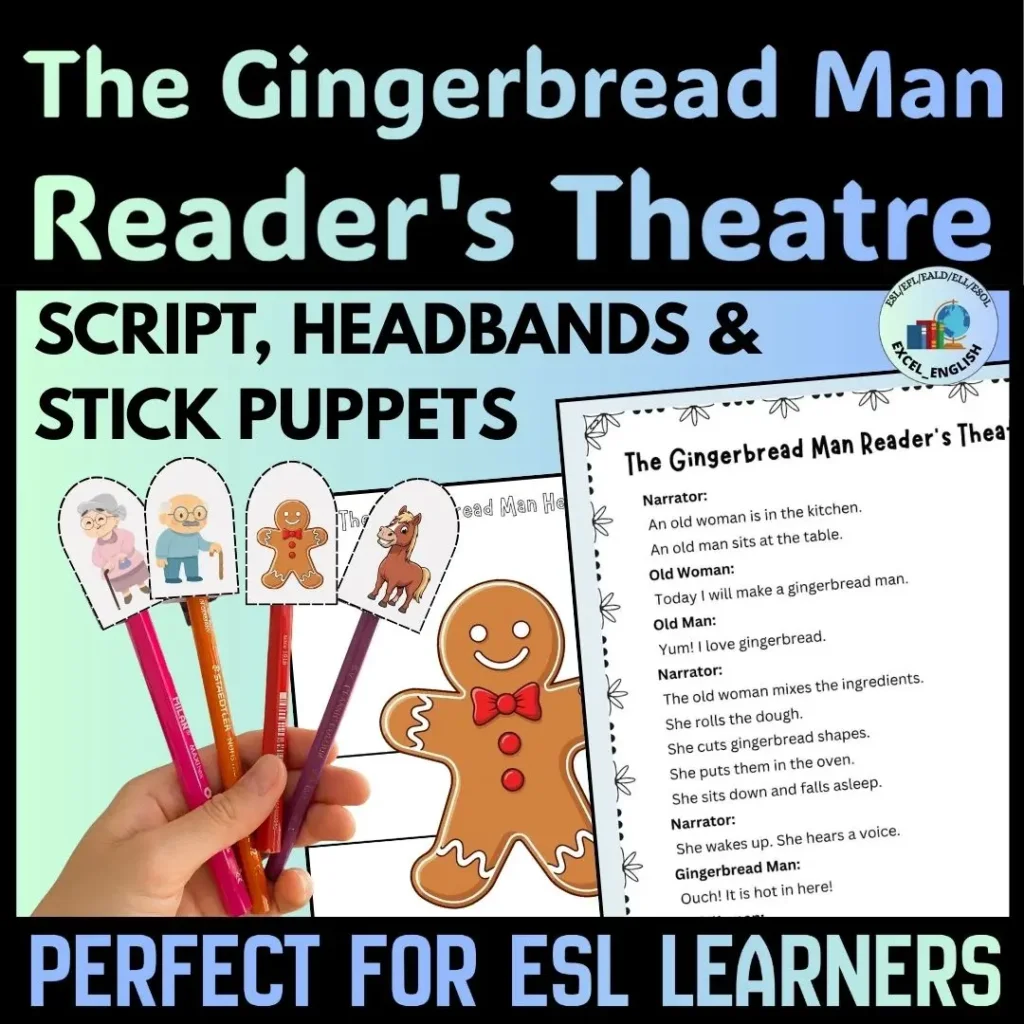
A ready-to-use script
Simple character headbands
Stick puppets
ESL-friendly roles and language
Perfect for Kindergarten and Stage 1 learners
👉 You can find everything here.
If you haven’t tried Reader’s Theatre with your ESL students yet, this might just become one of your favourite end-of-year traditions.