


Reader’s Theatre: A Fun Fluency Activity for New Arrival EAL/D Students
Readers Theatre: A Fun Fluency Activity for New Arrival EAL/D Students
The Three Little Pigs Reader’s Theatre quickly became one of the most joyful activities with my newly arrived students. The Three Little Pigs Reader’s Theatre provided my newly arrived Kindergarten, Year 1 and Year 2 EAL/D students with a fun way to practise English, build confidence and perform during our end-of-year fairy tale celebration.
Reader’s Theatre is simple to set up, and it supports fluency, pronunciation, intonation and expression. It is also one of the best ways to help young learners speak more clearly while having a genuinely good time.
Why Reader’s Theatre Works for New Arrival EAL/D Students
Reader’s Theatre is powerful because students speak a lot, but they do not feel pressured.
They hold a script. They practise vocabulary. They repeat key lines until the rhythm feels natural.
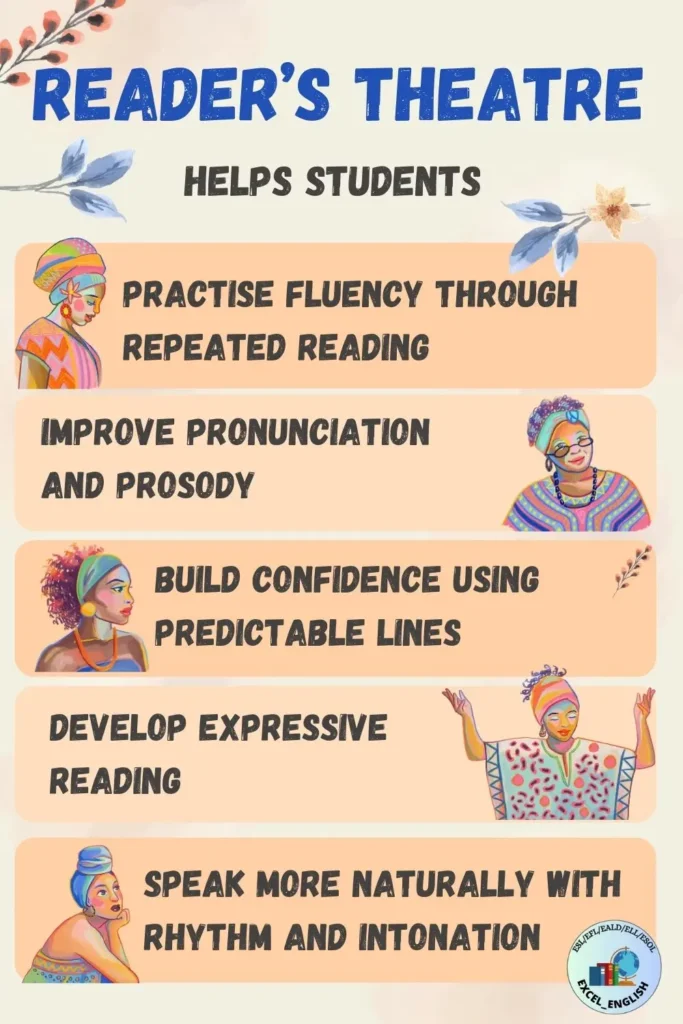
For new arrivals, this combination builds:
fluency
expressive reading
pronunciation and prosody
confidence in speaking English aloud
Even students who are still at a very beginning phase can join in, because the repeated phrases and predictable patterns make the language easier to learn.
How We Used The Three Little Pigs Reader’s Theatre in Our Fairy Tale Unit
At the end of the year, I planned a fairy tales and folktales unit for our new arrival students.
The Three Little Pigs was one of the stories we highlighted, and it instantly became a class favourite.
I introduced a simple Reader’s Theatre script at the beginner level.
It used clear, short sentences, repeated vocabulary, and familiar sentence frames that my students had practised throughout the term.
Students performed with hand puppets, finger puppets, stick puppets and simple masks, which made the experience playful and memorable.
Hand Puppets: The First Challenge and the First Laugh
The hand puppets were adorable, but they were also a little tricky.
My students absolutely loved using them, even though several couldn’t quite figure out how to move all of the fingers.
Some puppets flopped.
Some pigs waved their arms wildly.
One wolf somehow spun in circles.
But this is exactly what made the activity so much fun.
Students laughed, helped each other, and kept practising their lines while trying to coordinate the puppet’s hands and head.
The movement made the lines more meaningful, because they associated actions with vocabulary.

Finger Puppets and Stick Puppets: Independent, Creative, and Very Cute
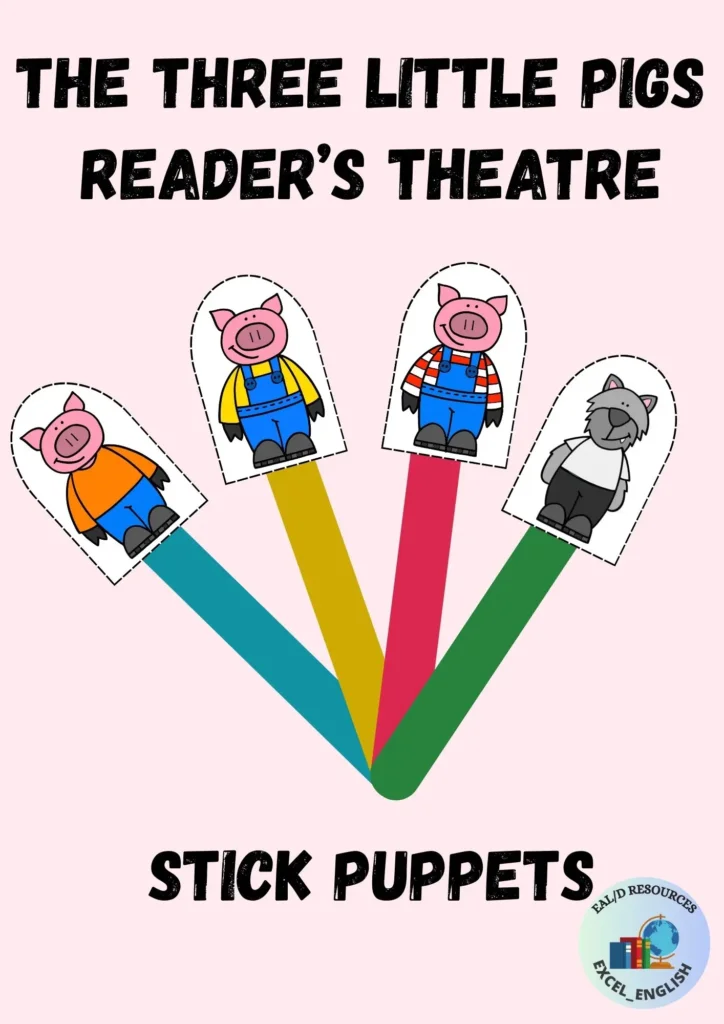
After using the hand puppets, students made their own finger puppets and stick puppets.
This allowed them to personalise the characters and take ownership of the activity.
Some students drew tiny eyebrows on their pigs.
Others coloured the wolf in bright blue “to make him less scary.”
One student even glued sparkles onto the chimney.
These puppets became their props for the Reader’s Theatre practice sessions.
The simple act of creating them strengthened vocabulary, because they labelled pigs, wolves, straw, sticks, and bricks while colouring and cutting.
Practising the Script: Repetition With Purpose
The simplified Three Little Pigs Readers Theater script helped students practise early reading fluency.
The repeated lines made it easier for new arrival students to join in, even when they were still developing basic English.
We focused on:
clear pronunciation
noticing punctuation like ! and ?
using expression when a character felt scared, happy, or surprised
speaking together as a group and taking turns
Students repeated each line many times.
The rhythm helped them feel confident, and they began to sound more natural as the week went on.
The Most Loved Lines From the Script
Two parts of the Three Little Pigs Readers Theater became instant favourites.
1. Helping the wolf “huff and puff”
Whenever the wolf prepared to blow the house down, the whole class joined in.
Students leaned forward, took a dramatic deep breath, and whispered, “Huff… and puff…” before blowing out strongly.
Even my shyest beginners participated in this moment, because the line was short, predictable, and fun to act out physically.
2. Pigs shouting, “Not by the hair on my chinny-chin-chin!”
This line was pure joy.
Students practised it over and over in their best “piggy voices.”
Some used high squeaky voices.
Others made deep pig snorts before saying the line.
Because the phrase repeats, students remembered it easily and used perfect intonation.
It became a natural chant, and even students who were not yet reading independently could join in confidently.

How Reader’s Theater Boosts Fluency, Prosody, and Pronunciation
Readers Theater improves early reading because it blends drama with repeated oral language practice.
Students read the same lines several times, which helps them move from slow, word-by-word reading to smoother, more expressive reading.
When students act out The Three Little Pigs Readers Theater, they naturally practise:
stress: deciding which word to emphasise
intonation: making their voice rise and fall
expression: sounding like a real character
pacing: speaking at a clear and steady speed
This oral language practice supports later reading comprehension, because fluent readers can focus on meaning rather than decoding each individual word.
What Teachers Love About Using The Three Little Pigs Reader’s Theatre
Teachers enjoy this activity for several reasons.
Low-prep – puppets, masks, and scripts are ready to print and use.
Inclusive – beginners can join in because the lines repeat and are easy to learn.
Highly engaging – students love acting, using props, and speaking like characters.
Supports fluency – repetition helps students sound more natural and confident.
Perfect for end-of-year performances – it is simple, sweet, and fun for families to watch.
Reader’s Theatre brings the story to life without the stress of memorising long texts, which makes it ideal for EAL/D learners who are developing English step by step.

How to Try This in Your Classroom
If you’d like to introduce The Three Little Pigs Readers Theatre, here are a few simple steps.
1. Start with a beginner-friendly script
Keep lines short and predictable.
Use repeated vocabulary like wolf, pigs, straw house, stick house, and brick house.
2. Model expression
Read your lines with exaggeration so students can hear how the character might sound.
You can even pretend to huff and puff dramatically to show how intonation changes mood.
3. Practise in short sessions
Ten minutes a day is enough for beginners.
The repetition builds fluency gradually and keeps the activity fun.
4. Add puppets or masks
Props reduce anxiety because students focus on moving the puppet instead of worrying about how they sound.
Even simple stick puppets make a big difference.
5. Perform for another class or for families
A small performance gives students a sense of purpose.
They feel proud when they read and act in English, especially after only a short time in Australia.
Final Thoughts: Reader’s Theatre Creates Joyful, Confident English Speakers
The Three Little Pigs Reader’s Theatre transformed our fairy tale unit into something magical.
My new arrival EAL/D students practised reading fluently, used expressive voices, played with puppets, and built real confidence in spoken English.
They laughed.
They repeated new words proudly.
They performed with joy.
Reader’s Theatre is playful, powerful, and perfect for young learners who are building English step by step.
Try Reader’s Theatre With Your Students
If you’d like to recreate this activity, you can grab my Three Little Pigs Reader’s Theatre pack in my TPT store.
You can also explore other Reader’s Theatre resources from teacher-authors, bookstores, or online retailers to bring more joyful reading experiences into your classroom.
Or try additional Three Little Pigs ESL activities to support vocabulary, comprehension, and confident speaking.

