


Why Use Reader’s Theatre With Your ESL Students

Why Use Reader’s Theatre With Your ESL Students
A simple, powerful way to build fluency, confidence, and real English
Why use Reader’s Theatre with your ESL students reading lessons already feel full and time-poor? Because it turns reading aloud from “please don’t pick me” into “can we do it again?” — and that shift is huge for ESL and EAL/D learners.
I still remember the first time I tried Reader’s Theatre with a small group of new arrival students. Some barely spoke in class. A few avoided eye contact when asked to read aloud. But once they had a script, a role, and peers beside them, something changed. They read. They smiled. They asked to practise again.
And that is why use Reader’s Theatre with your ESL students works so well in Australian primary classrooms — it builds confidence and fluency without the stress.
In this guide, I’ll walk you through:

What Is Reader’s Theatre?
Reader’s Theatre is a shared reading activity where students read from a script instead of a book. Each student has a role. They stand or sit together and read aloud, focusing on clear reading and expression.
There is:
-
no memorising,
-
no acting pressure,
-
no fancy costumes required.
Students keep the script in their hands. They read the same text several times, with a purpose. The goal isn’t performance quality — it’s practice.
This structure is one of the biggest reasons why use Reader’s Theatre with your ESL students works so well. Students feel supported, not exposed.

The Main Reasons Teachers Use Reader’s Theatre in ESL Classes
Before diving deeper, let’s name the big picture.
The core reasons why use Reader’s Theatre with your ESL students come down to four areas:
-
Fluency
-
Speaking
-
Comprehension
-
Confidence
These aren’t add-ons. They are the foundations of language learning.
Let’s look at each one.

1. It Builds Reading Fluency Naturally
Fluency doesn’t come from reading something once. It comes from repeated, supported reading.
Reader’s Theatre does this beautifully.
Students read the same script:
during the first read-through,
during group practice,
during rehearsal,
and again during performance.
But it doesn’t feel like drilling.
Students want to practise because:
they know their role,
they read together as a group,
there is a clear goal.
Over time, students stop reading word by word. They begin to read in phrases. Their pacing improves. Pronunciation becomes clearer.
This is a key reason why use Reader’s Theatre with your ESL students when fluency is a priority — especially for beginners and emerging learners who struggle with cold reading.

2. It Supports Speaking in a Low-Pressure Way
Many ESL students stay quiet not because they don’t understand, but because they’re afraid of getting English wrong.
Reader’s Theatre removes that fear.
Students:
read from a script,
speak at the same time as peers,
are not singled out.
The focus stays on the story, not on mistakes.
That’s another important reason why use Reader’s Theatre with your ESL students:
shy students participate,
voices grow stronger,
sentence rhythm becomes more natural.
It’s real speaking practice — without putting students on the spot.

3. It Strengthens Comprehension Without Extra Worksheets
To read a script well, students must understand:
who is speaking,
what is happening,
how characters feel.
As students practise, they naturally talk about meaning. They clarify vocabulary. They adjust their expression.
Comprehension grows through discussion and rehearsal, not long written tasks.
This natural connection between reading and understanding is a big part of why use Reader’s Theatre with your ESL students, especially when writing skills are still developing.

4. It Creates an Inclusive Classroom Experience
Reader’s Theatre works brilliantly in mixed-ability ESL groups.
Beginners feel supported because the language is scaffolded.
Emerging learners feel capable because they can succeed.
Confident readers stay engaged through expression and leadership.
Everyone has a role.
Everyone belongs.
In culturally and linguistically diverse classrooms, this sense of belonging matters — and it’s another reason why use Reader’s Theatre with your ESL students regularly, not just as a one-off activity.

Why Reader’s Theatre Works Especially Well for New Arrival Students
New arrival students need:
structure,
predictability,
safety.
Reader’s Theatre provides all three.
Language patterns repeat. Roles are clear. Expectations are simple.
There is:
no memorising,
no spotlight,
no pressure to read alone.
Students participate from day one, even with very limited English. That’s why use Reader’s Theatre with your ESL students is such a powerful choice in the early stages of settlement and language learning.

How to Do Reader’s Theatre in Your ESL Class (Step by Step)
Reader’s Theatre works best when it’s based on a familiar text.
Here’s a simple, classroom-tested process:
-
Print the script and read it together once. Talk briefly about the story.
-
Assign roles and ask students to highlight their own parts.
-
Practise reading several times — quietly first, then aloud as a group.
-
Add simple props to boost engagement:
-
headbands or head masks,
-
stick puppets,
-
different coloured T-shirts worn over school uniforms.
-
-
Perform for:
-
another group,
-
the class,
-
a buddy class,
-
or special guests.
-
Keep it relaxed. Fluency and confidence matter far more than perfection.

How I Use Reader’s Theatre in My ESL Classroom
In my own classroom, I use Reader’s Theatre:
as a fluency warm-up,
as a listening and speaking focus,
as a confidence-building activity,
as an informal oral assessment.
I often use it after reading a familiar story. Simple scripts with repeated language and clear characters work best — and this is exactly why use Reader’s Theatre with your ESL students has become a regular part of my practice.

Want to Try Reader’s Theatre for Yourself?
If you’ve ever tried writing your own Reader’s Theatre scripts, you’ll know it’s time-consuming. Simplifying language, balancing roles, and making scripts accessible takes planning time most teachers don’t have.
That’s why I’ve created ready-to-use Reader’s Theatre scripts designed specifically for ESL and EAL/D students. They’re simple, structured, and print-and-go.
You might like to start with:
-
The Gingerbread Man
-
The Three Little Pigs
-
Jack and the Beanstalk
-
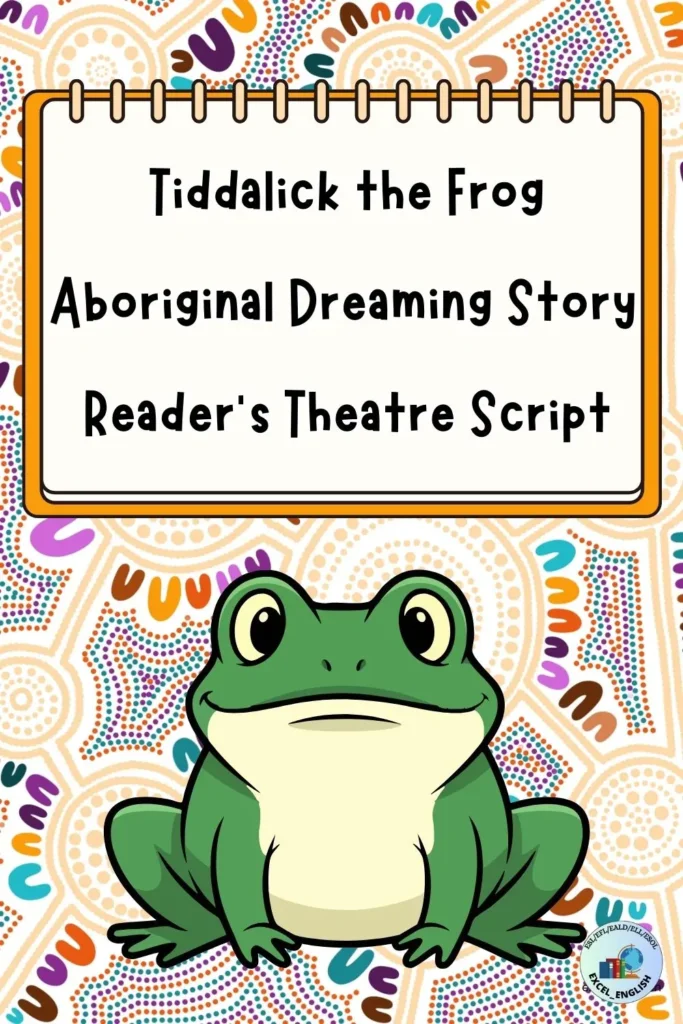
Tiddalick the Frog
-
How the Birds Got Their Colours
Each script supports fluency, speaking, and confidence — without adding extra prep to your workload.
👉 Try one script and see how your students respond.
And if you do, let me know how it went — I genuinely love hearing classroom stories.
See Reader’s Theatre in Action: The Gingerbread Man
If you’d like to see exactly how Reader’s Theatre works in a real ESL classroom, my post The Gingerbread Man Reader’s Theatre: The Perfect End-of-Year ESL Activity walks you through the process step by step. It became the ideal end-of-year task for my ESL and EAL/D students — purposeful, engaging, and manageable when students were tired and routines were changing.
This activity brought together reading, speaking, fluency, teamwork, and confidence in a way that felt natural and fun. Because the story was familiar and language patterns were repetitive, students had a clear reason to practise expressive reading and oral language.
It’s a practical, classroom-tested example of why Reader’s Theatre works so well for ESL learners — especially in the final weeks of term when you still want learning to matter.
👉 Read the full Gingerbread Man Reader’s Theatre post here and see how it worked in my classroom.

About the Author
Hi! My name is Ilvira. I’m an experienced EAL/D teacher working in Australian primary schools. I support multilingual and newly arrived students to build confidence in English, access the curriculum and feel a sense of belonging at school. I also work closely with classroom teachers to assess language growth and design practical EAL/D supports that work in real classrooms.
